
Test it, give it time, and know where it came from.
October kept coming back to the same few questions: how do you know something works, how long should learning take, and where did your habits come from?
An MMA coach who only trusts what has been tested live. A volleyball coach whose players got worse before they got better. A degree course in Liverpool that started applied sport science. And a catch-up on why athletes still ask to be told what to do. Read on for all four episodes, plus everything members got this month.
WEEK 1: ADAM SINGER, THE ONLY THING WE KNOW IS WHAT WE TEST (EPISODE 110)
Marco Perazzo joined Ian in Keith's place to talk with Adam Singer, an MMA coach of nearly thirty years at SBG Athens and, by day, a biomechanical engineer. Adam's approach rests on one test from his mentor Matt Thornton: training is "alive" or it isn't. The conversation covers why he constrains the room rather than the person to keep sparring safe, the 1990 Chavez-Taylor fight that shaped his position on head contact, why the calf kick still lands on UFC fighters, and why a blue belt in one gym does not mean the same thing as a blue belt in another.
"There is no written criteria. And so every gym has its own criteria." - Adam Singer
WEEK 2: ADAM SINGER, DO THE THING (EPISODE 111)
The second half of the conversation, with Marco again alongside Ian. Adam's programming comes down to three words, "do the thing", scaled for safety and variability. He describes periodising goals rather than constraints: broad and varied far from a fight, narrowing towards specificity as fight week approaches, with one rule throughout, which is to stay healthy. It closes on the difference between constraining to afford and constraining to potentiate, which Adam has built drills around, although he is candid that it barely holds up in grappling.
"My filter first and foremost is: does this help my practice?" - Adam Singer
WEEK 3: PERFORM WORSE, UNDERSTAND BETTER (EPISODE 112)
Ian and Keith went back to our October 2024 conversation with Ana Ramos, a volleyball coach, coach educator and researcher at the University of Porto. They follow Ana's training week, from a day off to recover physically and emotionally to 3v3 games with two balls in play, and talk through the constraints continuum, individual success criteria inside a team session, and Ana throwing her drill book in the bin every season.
Why it matters: in Ana's season-long study with 14 and 15 year olds, a more complex game model made the team perform worse before they understood the game better. Five of those players went on to play for the national team.
Listen: https://www.buzzsprout.com/2354827/episodes/20008376
WEEK 4: IT ALL STEMS FROM BYROM STREET (EPISODE 113)
Ian and Keith go back to where applied sport science started: Byrom Street, Liverpool, where Liverpool Polytechnic launched the world's first single honours sport science degree in 1975. Keith joined the staff in 1985, and the class he taught from 1986 to 1989 has just held its 40th reunion. They compare their own routes into the field, the spread of sport science across the UK, and what changed when funding arrived in the 1990s. It closes on the copy and paste fallacy and a point both hosts keep coming back to: strong theory is not enough without the practice.
Listen to all episodes: https://www.buzzsprout.com/2354827
CLIP OF THE MONTH: IF IT ISN'T TESTED, WE DON'T KNOW
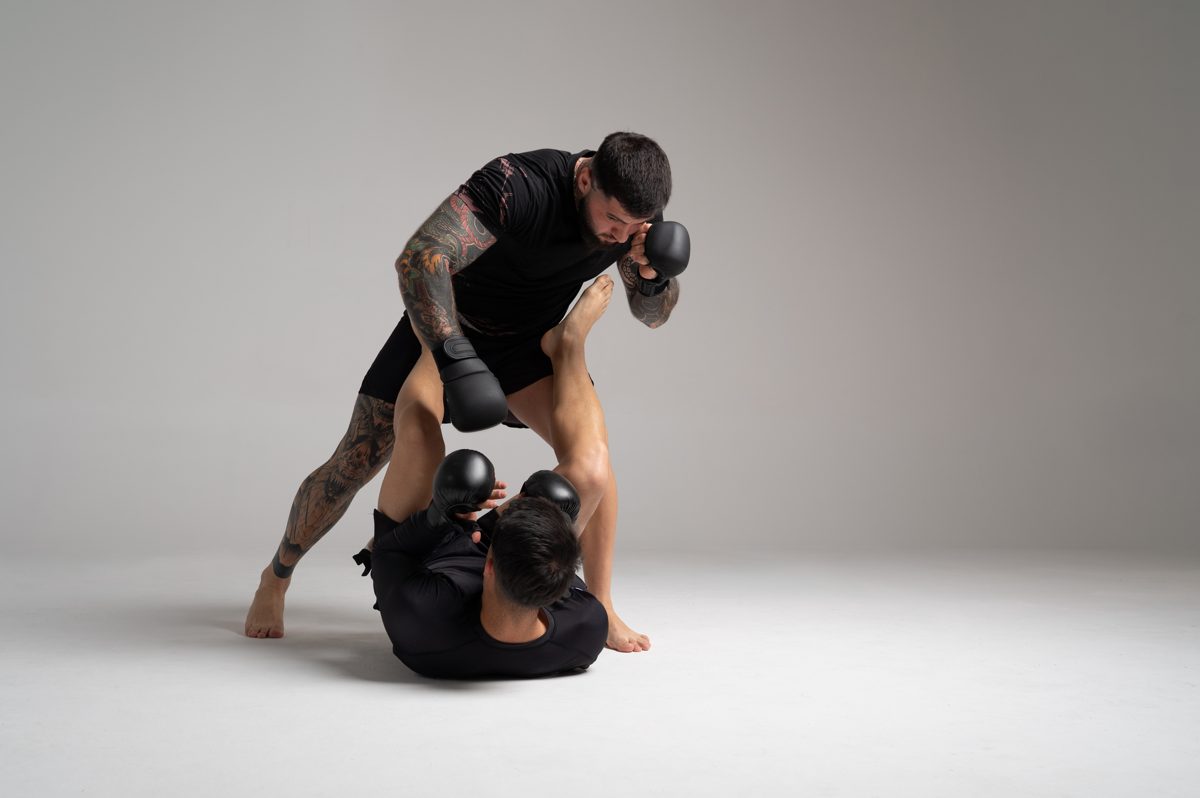
"The only thing we know for real is what we test." - Adam Singer, Episode 110
Adam's point applies well beyond the cage. A technique that has never been tried against resistance, a drill that has never been checked against the game, or a claim about learning that has never been tested is still an assumption.
MEMBERS-ONLY THIS MONTH
Monthly catch-up (29 October): Ian and Keith with Raphael, Marco, Kyle and Yuji on athlete agency, the pressure for quick results, variability, hearing and feeling information, and how much help to give a learner. The recording, show notes and the October Monthly Catch-Up Summary, including a Research Corner on removing sources of information, are in the members' area.
Theory to practice presentation, Affective Learning Design: Ian works through Headrick et al. (2015) on building emotion into representative practice, with examples from cricket, golf, basketball, football and diving.
Early release, Episode 114: Ed Coughlan and Alan Dunton (MTU) on teaching skill acquisition online, and the question their students ask most: "can I live in the middle?" Members can watch it now, before it goes public on 6 November.
Guest review video, Episode 112: the full video of Ian and Keith's review of Ana Ramos.
WHAT WE'RE READING
Headrick, J., Renshaw, I., Davids, K., Pinder, R. A., & Araujo, D. (2015). The dynamics of expertise acquisition in sport: The role of affective learning design. Psychology of Sport and Exercise, 16, 83-90.
It is the paper behind this month's members' presentation, and Ian shared it ahead of the catch-up. Fear of falling, of being hurt or of looking incompetent came up several times on that call, which is exactly the territory this paper covers.
NEXT MONTH
November opens with Ed Coughlan and Alan Dunton on 6 November, followed by a fly-on-the-wall conversation with Carl Woods on 13 November, and the November round-up at the end of the month. The November Members' Catch-Up date and Zoom link will be shared in the WhatsApp group. See you next month.
Ian & Keith


Responses