
Chris Button on open water, Gullich on early specialisation, Mark O'Sullivan on a scrapped checklist, and the coach who could read a cricketer's background off his stance.
_______________________________________________________________________________
Four different sports, four different stories, and the same idea underneath all of them: technique is a record of the environment that produced it, not something you can teach in the abstract and expect to transfer.
A Mumbai coach reads a cricketer's background off his batting stance. A pool-trained swimmer can't judge distance in open water. A checklist built for coach education describes skills most professionals never explicitly learned. Read on for all four episodes, plus this month's catch-up.
Week 1 - Chris Button: Twenty Minutes From the Sea
The second half of our 100th-episode conversation, this time on water safety. Chris's own research shows pool-taught swimming skills don't reliably carry over to open water, and why a day at the beach or the river teaches something a pool never can.
"The problem with learning to swim in a pool is it's very mechanical. They get quickly bored of just going up and down and trying to repeat the same pattern." - Chris Button
Week 2 - What Makes a Champion
A 51-study meta-analysis on early specialisation versus early diversification, and a story from Ian's own coaching that puts a human face on the finding: a 17-year-old cricketer, training six nights a week, whose actual answer when asked what he wanted was one day off to go surfing with his mates.
Why it matters: world-class performers specialised later and did less total practice in their main sport than national-level athletes who never made it. Junior success doesn't reliably predict senior potential.
You can read and listen here:
Read: The Champion Who Wasn't Supposed to Make It. Listen: What Makes a Champion on Buzzsprout
Week 3 - The Technique Register Nobody Needed
Ian and Keith revisit December's conversation with mark O'Sullivan (Norwegian School of Sport Sciences, one of our own PhD Graduates). Sweden's FA conce handed every coach a booklet of 32 techniques, scrapped in 2014 but still ciriculating elsewhere. Shown the lsit, a former profrssional now studying under Mark estimated he could do about 20 percent of it.*
Listen to the original conversation here:
The Technique Register Nobody Needed
Listen to the original conversation, Episode 72
Week 4 - You Can Tell By The Stance
Pulled straight from this month's catch-up (see below) - a Mumbai coach who sorts cricket trials by batting stance alone, a Scottish golf coach who manipulates the rough on purpose, a Buenos Aires training ground nobody ever resurfaced, and two stories about practising for conditions you can't control.
Read: You Can Tell By The Stance. Listen:
Clip of the Month: Nothing About a Pool Prepares You for This
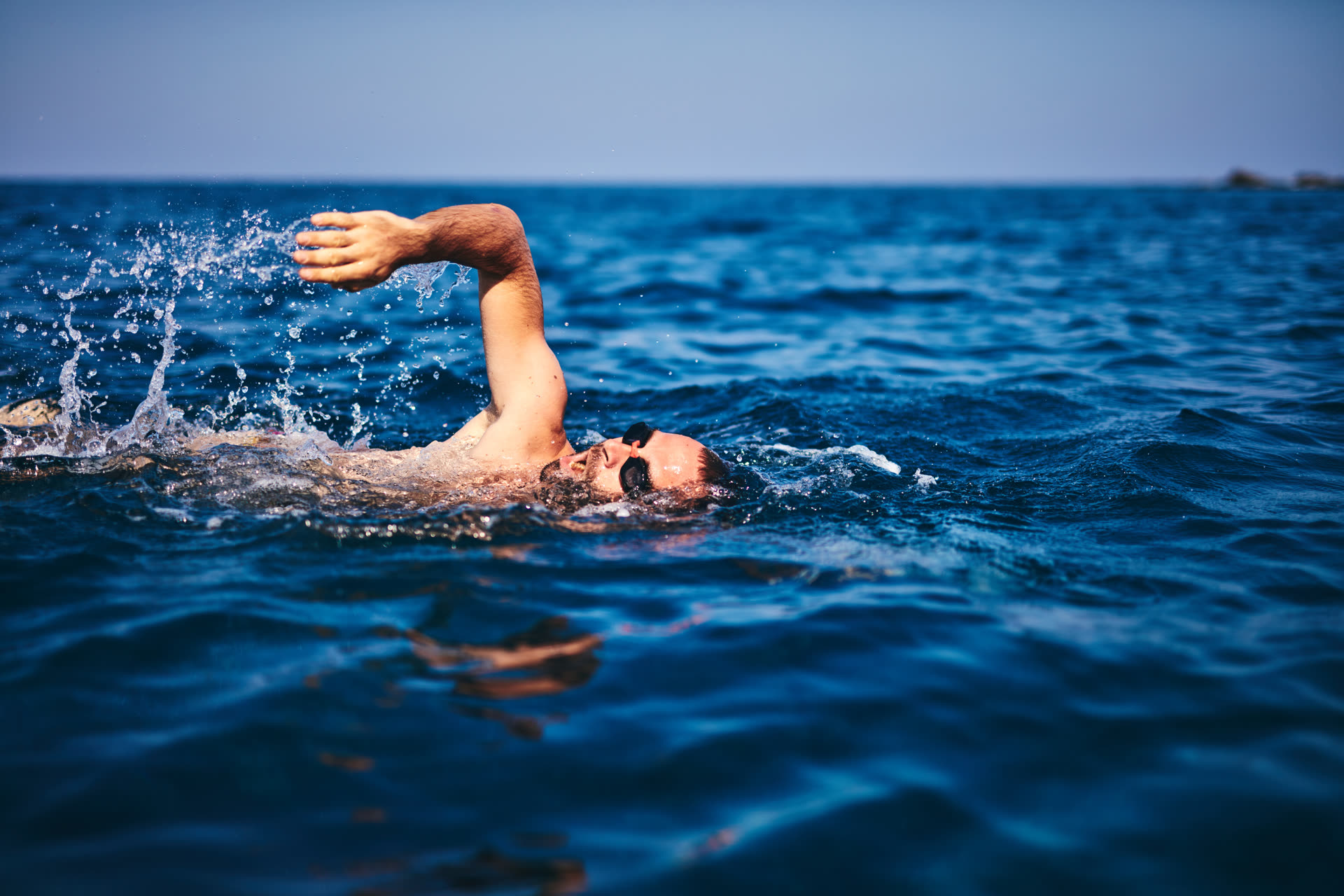
A swimmer's arm breaking the surface mid-stroke in open blue water.
"People are not well prepared to be in open water. They spend so much of their early skill acquisition in a very comfortable, warm place where the water doesn't move, where they can see the exits, the entrances, the ground. And these things aren't true of a beach or a river." - Chris Button
The fix wasn't more pool time - it was taking children to open water instead.
Members-Only This Month
- Monthly catch-up (1st Septmber): an hour with Ian and Keith on all things constraints and a session design and review tool.
What We're Reading
"A Constraints-Led Approach to Golf Coaching" to https://www.routledge.com/A-Constraints-Led-Approach-to-Golf-Coaching/Renshaw-Arnott-McDowall/p/book/9780367482671]**
Pete Arnott and Ian's own book, A Constraints-Led Approach to Golf Coaching (co-authored with Graeme McDowall), came up directly in this month's catch-up - it's where the rough-manipulation story in Week 4 is written up properly.
Next month: September's theory paper looks at why practice environments quietly get tighter over time without anyone deciding it should happen, a new paper from Woods, Richard, Martin and Cairney on affordance design, including a university building facade that became a free dance studio purely because of what its surfaces allowed. The podcast review in week three breaks new ground with a chat with Jay Carter about our podcast on "What Makes a Champion" and his own talk with 2026 Open winner Ryan Fox. We round off with our monthly catch-up. See you next month.
Ian & Keith



Responses