
Two Into the Same Deep, Dark Hole (Part Two)
Nov 13, 2026 Jay Carter Part Two (Episode 119, December 2026, Week 2)
Part One ended on a question about copying. If a golfer can reproduce someone else's swing on the range, does that mean they can find the right swing when the conditions change? Part Two starts one step earlier, with how beginners learn in the first place, and then follows that thread through two-sidedness, affordances and how constraints-led coaching gets applied in practice.
Jay Carter is the National Coach for Golf New Zealand and hosts his own podcast where he interviews people from high performance sport. This episode is jointly produced and published on both shows.
Do Beginners Really Need the Rules?
Jay opened Part Two with a challenge he'd heard from Sarah-Kate Millar. The Dreyfus model, where a learner starts heavily rule-bound and the rules drop away as they become expert, had always made sense to him. Sarah-Kate wasn't sure it was an accurate picture of skill learning.
The model, from Hubert and Stuart Dreyfus in the 1980s, describes five stages: novice, advanced beginner, competent, proficient and expert. Novices follow context-free rules; experts act intuitively, with no rules at all. From an ecological dynamics view, the problem is the starting point. Nobody learns to walk or kick a ball from rules, and a rule is the coach's description of a skill, not the information the learner has to pick up. The stages are also linear and the same for everyone, where real learning is individual, with plateaus and dips. The irony is that the Dreyfus brothers' account of the expert, responding directly to the situation without rules, sits quite close to ecological dynamics. It's the novice end that doesn't fit.
Keith went back to observation. People are very good at reading movement, even from a handful of lights placed on the joints of someone walking in a dark room, and for most of history that is how skills were passed on: come hunting with us, come fishing, come and build the house.
"So observation has always been very, very powerful. I just wonder whether we are not really fully understanding it... and focusing too much on explicit verbal instructions as a form of transmitting information during learning." - Keith Davids
Ian asked what the rules would even be for kicking a ball. He described telling coaching students in Middlesbrough he would fail any lesson that taught young children the side-foot pass step by step, when a young child can't generate power that way, and contrasted it with giving them a big, light ball they can hit with their laces. He also told the story of teaching his daughter badminton with a shuttle hanging from a rope. She missed the first few real shots, then found her own solution.
"You've got to go through this process of they'll work it out, they'll find the best solution if we allow it to happen." - Ian Renshaw
Adam Scott's father did something similar, starting him with a bigger ball and club head and making them smaller over time. Ian's point was that this is task simplification, a constraints-led approach used without the label.
Two Sides, Built Early
Jay asked what it would take to get State or Test cricketers throwing equally well with either hand. Ian's answer was that it would be very hard as an adult, that underarm with the weaker hand is a realistic goal, and that with finite practice time there are probably better places to spend it. Keith separated two aims: developing a child's perceptual-motor skills, and improving an adult's performance. For children he described scaling everything: underarm before overarm, short distances, lighter balls, and separating throwing for distance from throwing for accuracy.
Ian gave examples from his own practice: 75 balls hit right-handed and 75 left-handed in the garage, players who can switch-hit because they did both from the start, and basketball players doing layups off either foot. Keith added the evidence from football.
"Two-footedness is a big predictor of a professional player earning more money. They're paid more, two-footed players." - Keith Davids
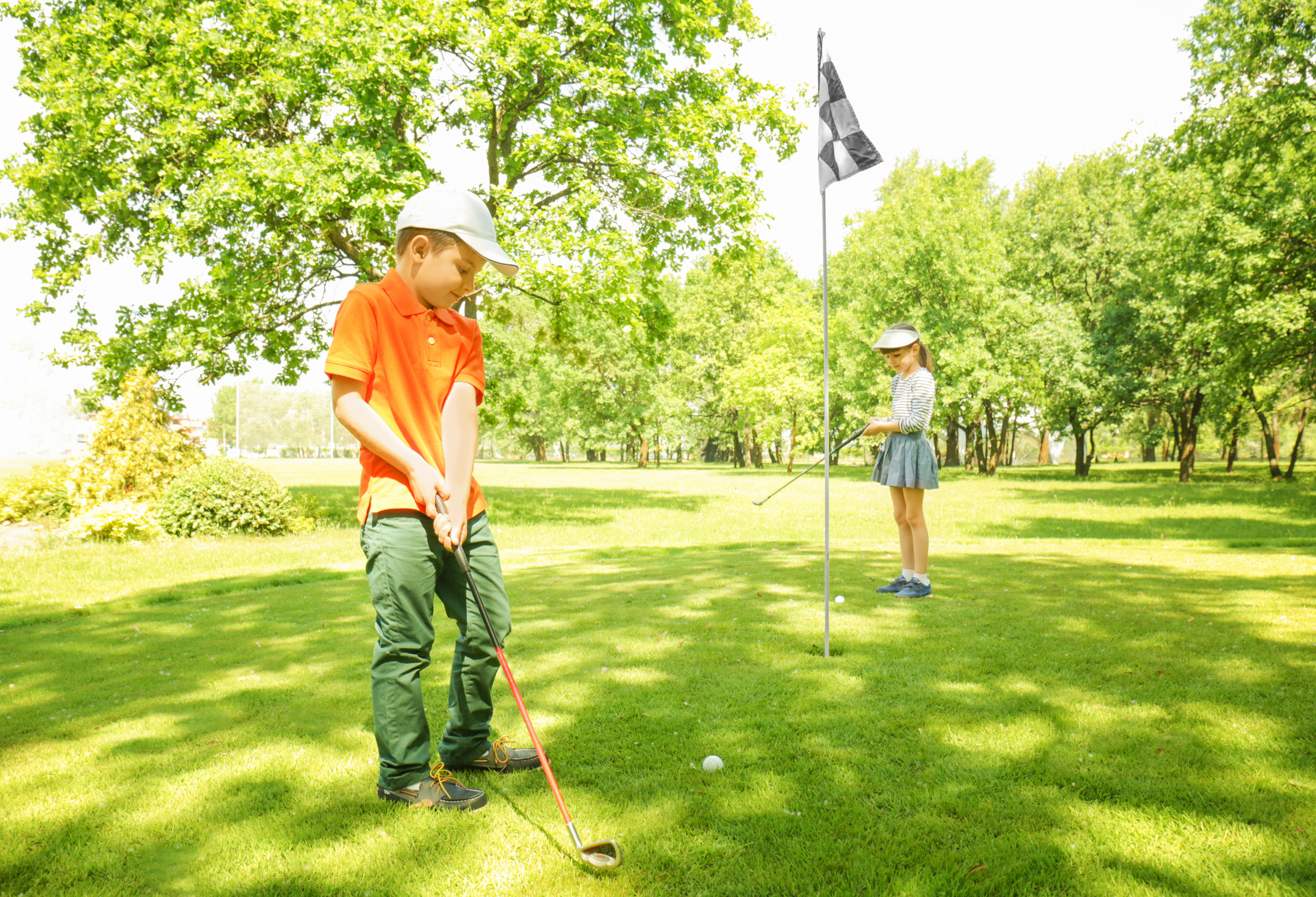 [Format: Image]
Upload `images/AdobeStock_163193254.jpeg` - caption: "Two-sidedness is far easier to build in childhood than to add later."
Skill Adaptation, Not Skill Acquisition
Keith linked this to an argument he and Duarte Araújo made in 2011: skill acquisition is better understood as skill adaptation. The important part is how a performer addresses the performance environment, meaning how they orient, balance and position themselves to pick up information and act, rather than repeating one precise technique.
Coaches can invite this through how they feed the ball. Feed it quickly and out wide, and a player has no time to cross the body with the dominant hand. Ian described a kicking game where stopping the ball using the stronger foot on the wrong side cost half a point, which changed behaviour straight away. He also mentioned Kevin Mulcahy, whose Gaelic football team rarely kicked on the weak side until he made it a target, and a Brisbane Lions academy session a few years ago where the drills meant players hardly ever used their weaker side.
Keith pointed out that the few elite one-footed players get away with it because of how they position themselves, not just because of their strong foot.
"The clever bit is that the way that they address the performance environment puts them in a position of power to use their left." - Keith Davids
He also gave the opposite case from Ludovic Seifert's climbing research. Novices adopt an X position because their goal is not to fall. Skilled climbers, who need to move quickly and save energy, cross the midline to use the holds available to them.
What Actually Separated Richie McCaw
Jay passed on something Wayne Smith, a long-serving All Blacks assistant coach, once told him. Richie McCaw captained New Zealand to two Rugby World Cup wins and is widely regarded as one of the best players the game has produced. Sam Cane followed him into the openside flanker position, whose main job is winning the ball back at the breakdown, the contest for possession after a tackle. What separated the two of them there wasn't a motor skill that others in the game couldn't do. It was knowing when to attack and which ones to leave alone. Jay's question was how a coach can develop that in someone who doesn't share Richie's perceptions and history.
Keith's answer was that the coach's job is to understand how the athlete perceives the environment, rather than commentating from the sideline about what they should have seen. He added that affordances are tied to effectivities, which change from moment to moment.
"If you ask somebody... is this incline steep and challenging?... and you ask them the same question when they're not fatigued, you get a different answer because their effectivities, how they're feeling, their dispositions, their tendencies at that moment... shapes the way that they perceive and use affordances in the environment." - Keith Davids
Ian's golf version: how far you think you can hit an uphill or blind shot on the eighteenth depends on whether you're fatigued, running on adrenaline because you're in contention, or still angry about the last shot.
Applying It Well
Jay's final question was what's current for the hosts. Keith credited the experiential knowledge coaches bring, which refines the theory as much as the research does. Ian named the main risk: people learn a little about an approach and apply it wrongly, and it gets a bad name. He recalled Andy Rogers describing how game sense was sometimes applied in New Zealand.
"People would apply the principles precisely. You know, like at three minutes, 32, I've got to ask a question. But they didn't know what question to ask, but they asked a question anyway." - Ian Renshaw
The constraints-led equivalent is over-constraining until practice becomes prescriptive, or adding random constraints and forgetting the intention behind them. Keith's closing point was that the skill lies in the quality of the application, and that well-designed development will keep making new skills normal. Ian's example was the reverse sweep, and the Cruyff turn he practised for hours in 1974 that seven-year-olds in New Zealand now do without thinking. If players don't have that range of skill adaptability, they don't last at the top level.
Listen to Part Two with Ian Renshaw, Keith Davids and Jay Carter on The Constraints Collective podcast. Listen at buzzsprout.com/2354827 [link this text to https://www.buzzsprout.com/2354827, and swap in the Episode 119 link once it's live]
Part Two of Two. Missed Part One? Find it in the blog from Fri 4 December.