
Foxy's Long Way Round: How New Zealand's Open Champion Didn't Take Golf Seriously Until University
Jul 30, 2026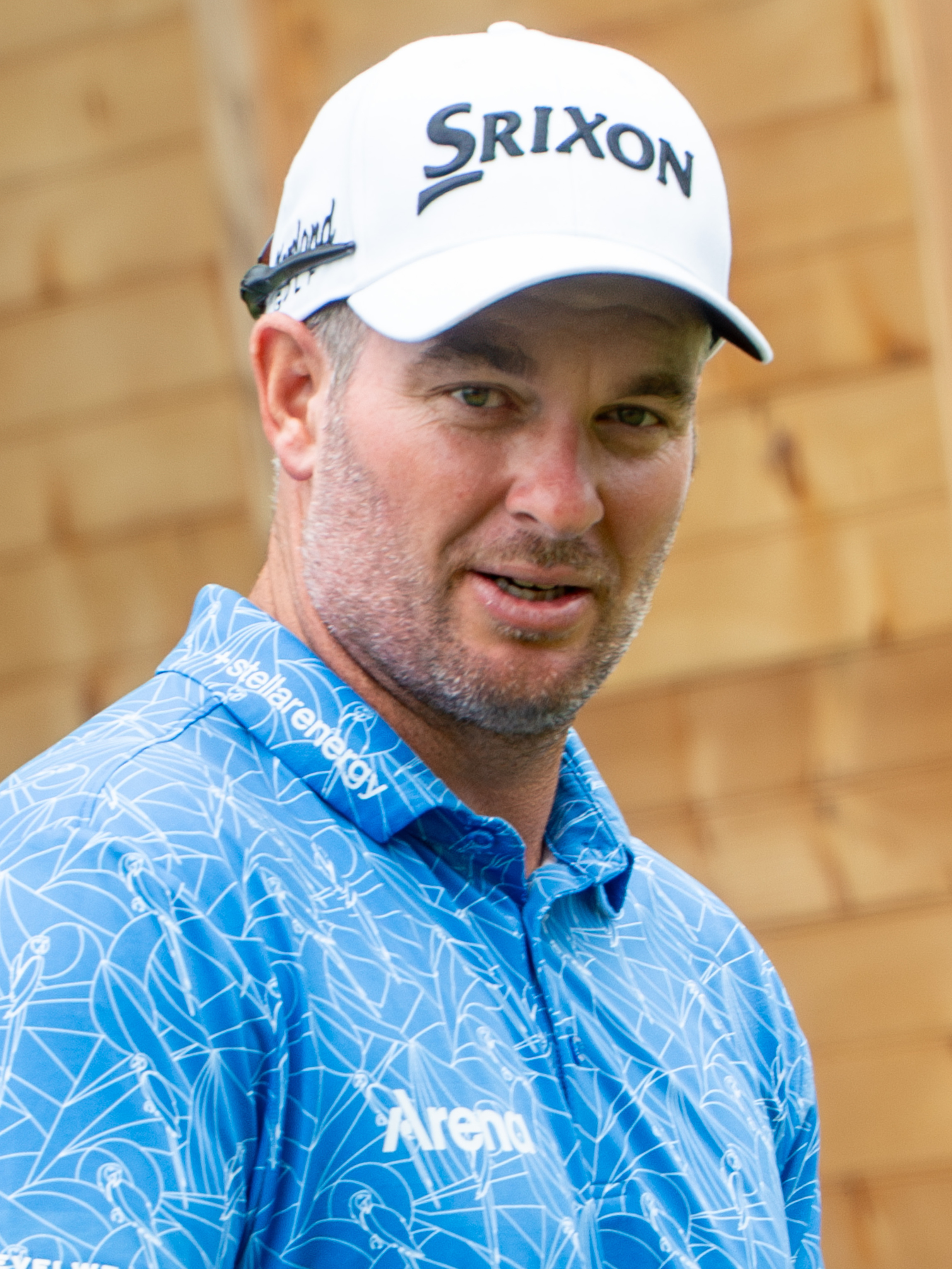
Jay actually interviewed Ryan Fox on *Talking Performance* back in 2024, and republished the episode this August after Fox won The Open Championship at Royal Birkdale. Listening back to it with Güllich’s paper fresh in our heads, the interview came across to us as a case study that was a perfect fit for our discussions.
Not a golfer who happened to play other sports — the reverse
Given his background with New Zealand sporting royalty on both sides of the family, it is perhaps surprising that he became a golfer and not a rugby player or cricketer. His father Grant Fox was a World Cup-winning All Black and one of the most feared goal-kickers the game has produced; and early success in both sports would seem to suggest that the story would write itself. He had the genes and the nursery to become a legend in sports that New Zealand revere. It’s not the story Ryan tells.
“I had sport in my blood,” he says, but the sport wasn’t golf. His grandfather, Merv Wallace, played cricket for New Zealand through the 1930s, 40s and 50s and later coached the national side — and it’s cricket, not golf, that dominates Fox’s account of his own childhood. He played representative cricket for Auckland at under-12 and under-14, then First XI cricket first at St Kentigern (age 15) and then at King’s College after he changed schools. In his final two years at King’s, his team won the Gillette Cup — New Zealand secondary schools’ premier cricket competition — with a teammate named Tim Southee, who’d go on to play well over 100 Tests for the Black Caps. That’s not a participation trophy. That’s a genuinely high standard — school sport isn’t elite sport, but this is about as high as it gets in New Zealand school sport — reached in a sport that wasn’t the one he ended up famous for.
He wasn’t only playing cricket, either. First XV rugby at King’s, “all the way through school.” Competitive tennis, coached a little himself at 16 and 17. He describes the common thread: whatever sport he played, he wanted to hit or throw or hit the ball hard and worry about accuracy later — “I just wanted to smash the crap out of it, not really care where I went,” he says of both his cricket batting, tennis serves and his early golf swing. Golf, at that stage, was just one more thing he was good at without being remotely serious about — a two-or-three handicap as a schoolboy, playing club golf at Whitford Park, more interested in distance than the scorecard.
Late Specialisation: The turn came at university
Here’s the detail that matters most for our purposes: Ryan Fox’s actual specialisation in golf didn’t happen in childhood at all. It happened at university, after he’d already stopped playing rugby, cricket and tennis. Partway through his first year studying law at Auckland University, a degree he “hated with a passion,” before switching to psychology, he found he couldn’t cope without something competitive in his life. Golf emerged as his competitive outlet of choice. “Let’s give golf a go, get a coach,” is how he remembers deciding. From a two-or-three handicap he got to scratch quickly once he actually applied himself, and it snowballed from there — provincial golf for Auckland, a tight-knit group of mates (several of them, like him, ex-cricketers and rugby players) pushing each other through the amateur ranks, and eventually a professional career now standing at a major championship.
The Link to Güllich et al.’s Findings
Our episode 103 on The Constraints Collective podcast dug into Güllich, Hardy, Kliegl and colleagues’ 2021 meta-analysis — 51 studies, roughly 6,000 athletes, across 15 countries. The headline finding cuts against a lot of youth-sport orthodoxy: athletes who went on to become senior champions typically specialised “later” played a “wider” range of sports as children, and accumulated “less” structured, focused practice time in their teenage years than athletes who reached a high national standard but never quite broke through to elite level. Ryan Fox is close to a textbook illustration of that pattern — high-standard First XI cricket, First XV rugby, and competitive tennis, with serious, dedicated golf practice not starting until his late teens.
But what about Tiger and The Williams Sisters?
None of this means early specialisation never works. It plainly does, sometimes spectacularly — golf’s own Tiger Woods is the example everyone reaches for, a child essentially raised inside one sport from toddlerhood who became the most dominant player of his generation. Güllich’s data doesn’t erase cases like that; it contextualises them. They’re visible precisely because they’re unusual — survivorship stories that get told and retold, while the much larger, quieter base rate of late-specialising, multi-sport champions doesn’t make for as neat a highlight reel. The lesson isn’t “early specialisation never produces champions.” It is that a multi-sport childhood, and a golf career that didn’t get serious until university, is not a detour from a career like Ryan Fox’s — for most future champions, something close to it “is” the pathway.
Thanks to Jay for flagging the clip — it’s exactly the kind of real-world case study that makes the research land. If you haven’t listened yet, our full breakdown of Güllich et al. (2021) is Episode 103, “What Makes a Champion?” and Jay’s original conversation with Ryan Fox — republished after his Open win — is well worth your time on [Talking Performance](https://talkingperformancepod.com/). Whilst you are there, take the time to explore the 197 other fantastic episodes; so much learning to be had :)
If your have your own stories that look like Ryan Fox’s — kids who were genuinely good at more than one sport as a kid, before settling on the one they are known for now — we’d love to hear it.
“This is part one of a two-part series. Part two digs into the ecological dynamics and constraints-led ideas hiding inside Fox’s own account of his development (to follow).”
Categories
All Categories